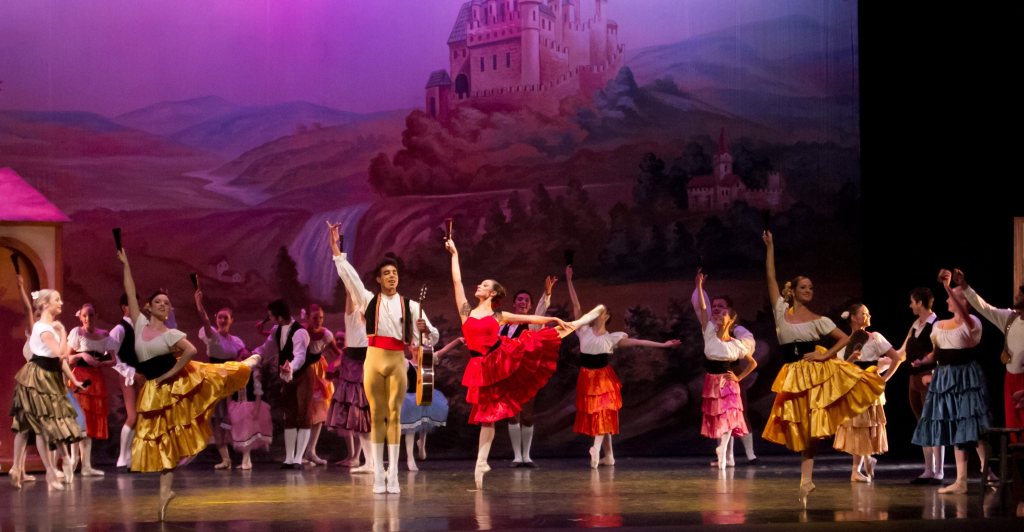
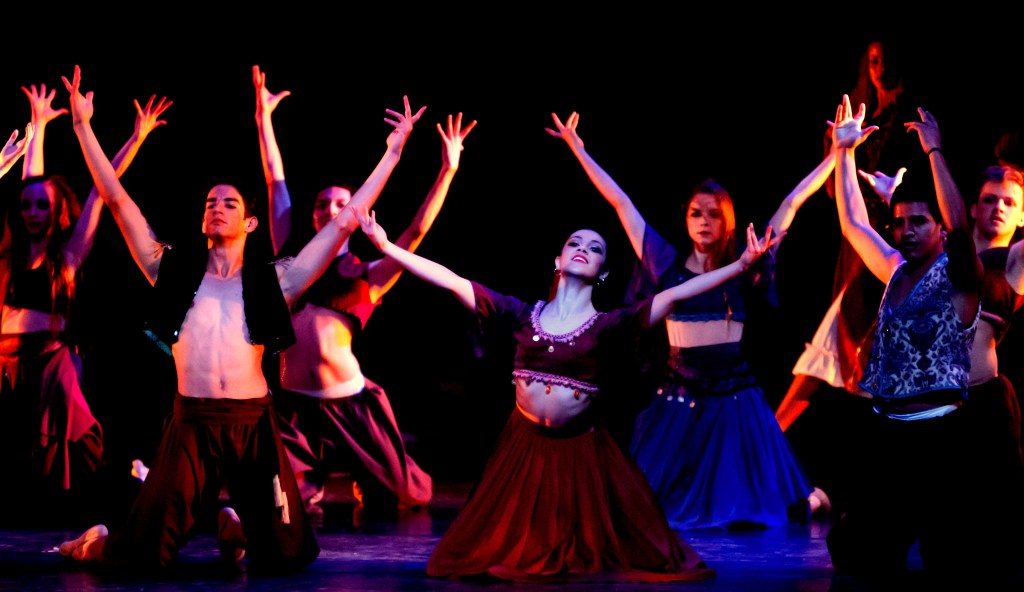
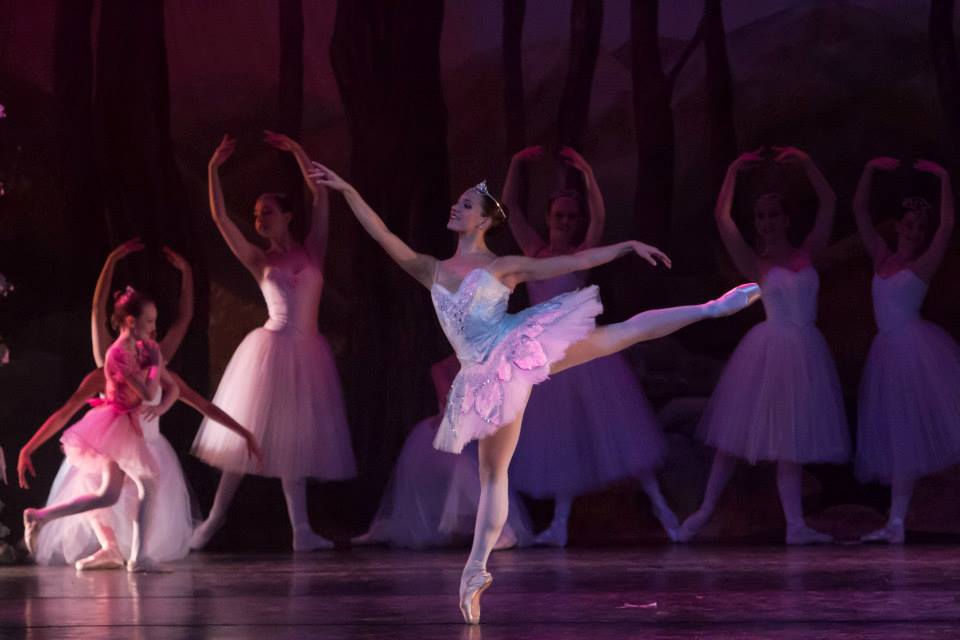
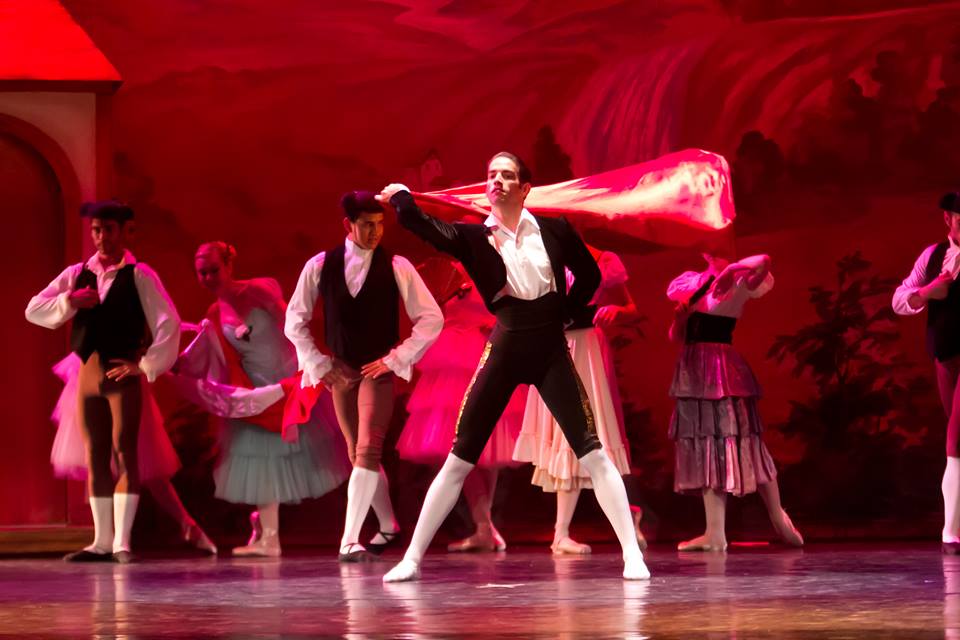
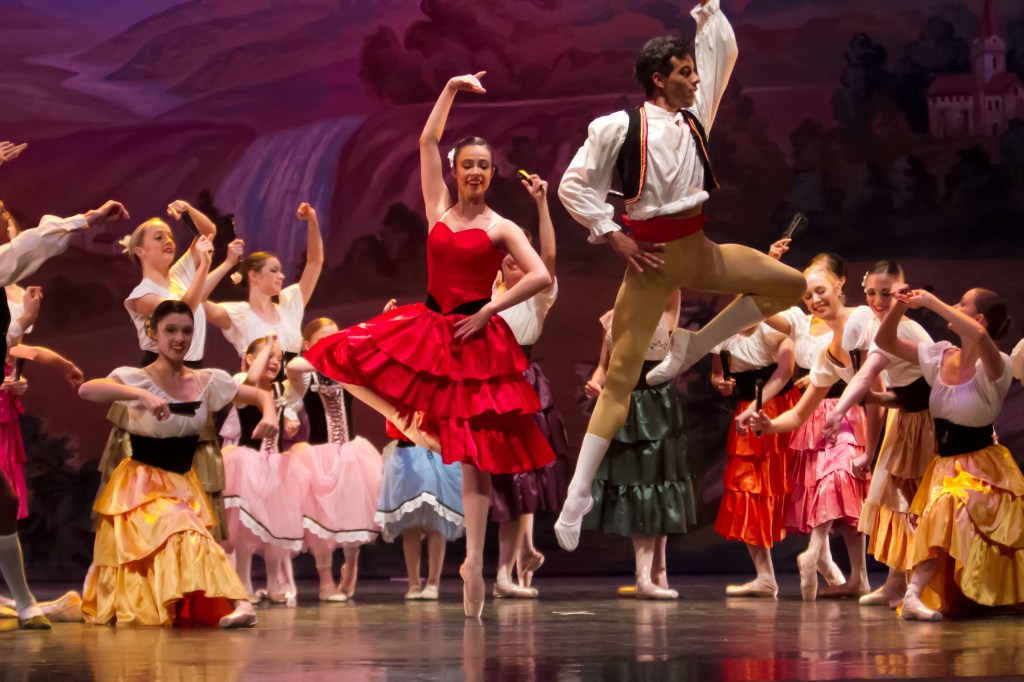
Mr. McIntyre has created his own original version of this classic traditional ballet, Don Quixote and restaged it on several occasions.
DON QUIXOTE HISTORY
Don Quixote is a ballet originally staged in four acts and eight scenes, based on an episode taken from the famous novel Don Quixote de la Mancha by Miguel de Cervantes. It was originally choreographed by Marius Petipa to the music of Ludwig Minkus and was first presented by the Ballet of the Imperial Bolshoi Theatre of Moscow, Russia on 26 December [O.S. 14 December] 1869. Petipa and Minkus revised the ballet into a far more expanded and elaborated edition in five acts and eleven scenes for the Imperial Ballet, first presented on 21 November [O.S. 9 November] 1871 at the Imperial Bolshoi Kamenny Theatre of St. Petersburg. All modern productions of the Petipa/Minkus ballet are derived from the version staged by Alexander Gorsky for the Bolshoi Theatre of Moscow in 1900, a production the Ballet Master staged for the Imperial Ballet of St. Petersburg in 1902.
SYNOPSIS
Prologue: Driven by the vision of Dulcinea, the tarnished, yet inspired, Don Quixote begins his adventures with his trusty squire Sancho Panza in tow.
Act I: Sevilla. Kitri, Lorenzo’s daughter, is in love with Basilio. Much to her chagrin, she learns of her father’s plans to marry her to Gamache, a foppish nobleman. Don Quixote and Sancho Panza enter the village, causing great commotion. Noticing Kitri, Don Quixote wonders if he has, at last, found his Dulcinea. At the height of merriment, Kitri and Basilio, aided by their friends, Espada and Mercedes, sneak off followed by Don Quixote and Sancho Panza. Gamache and Lorenzo attempt to pursue the young couple.
Act II. Scene 1: Gypsy Camp. Don Quixote and Sancho Panza discover the fleeing couple in a friendly gypsy camp. All are inspired by the romance of the night. As the vision of Dulcinea appears to him, Don Quixote realizes Kitri is not his “ideal” but indeed belongs with Basilio. Suddenly the wind gains momentum. Don Quixote foolishly attacks a windmill, believing it to be a giant threatening Dulcinea’s safety. Failing miserably, he collapses into a deep sleep.
Act II, Scene 2: The Dream. Don Quixote has an enchanted dream of beautiful maidens in which the image of Kitri symbolizes his Dulcinea.
Act II. Scene 3: Sunrise. Lorenzo and Gamache interrupt Don Quixote’s dream. Sympathetic to the plight of the young lovers, Don Quixote attempts to lead Lorenzo and Gamache astray.
Act II, Scene 4: A Tavern. Finally discovered, Kitri is forced by Lorenzo to accept the attentions of Gamache. The thwarted Basilio commits “suicide”. Upon learning of the farce, Kitri implores Don Quixote to persuade Lorenzo to wed her to the “corpse”. Instantly Basilio comes to “life”! Triumphantly, Kitri leaves to prepare for marriage while Don Quixote and Basilio salute Lorenzo and Gamache for stoically accepting the inevitable.
Act III: The Wedding. The village celebrates the marriage. Don Quixote congratulates the couple, bids them a warm “farewell”, and resumes his ever-lasting adventures.
PAST PERFORMANCES – 2011 & 2013
 DARREN McINTYRE