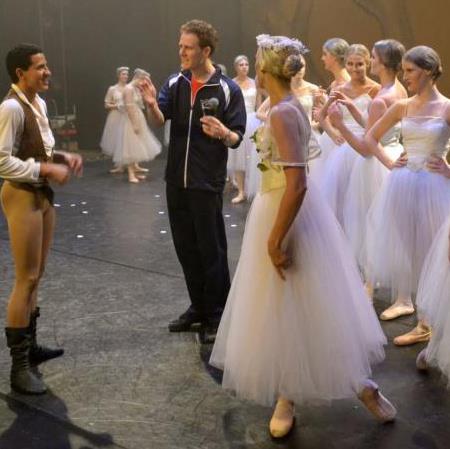
Mr. McIntyre has created his own original version of this classic traditional ballet, Giselle and restaged it on several occasions.
Origins, Music, and History
Giselle premiered at the Paris Opera on June 28, 1841, during the height of the Romantic era in ballet. The ballet was created through a remarkable collaboration between librettists Jules-Henri Vernoy de Saint-Georges and Théophile Gautier, who based the story partly on Heinrich Heine’s writings about the Wilis – supernatural female spirits who dance men to death. The original choreography was created by Jean Coralli and Jules Perrot, though Perrot’s contributions were initially uncredited due to contractual obligations at another theater.
The score was composed by Adolphe Adam, who wrote the entire music in just three weeks – a remarkable feat considering the ballet’s complexity. Adam’s composition was groundbreaking for its time, as he created specific themes (leitmotifs) for different characters and emotional states, a technique that would later become standard in ballet composition. The music masterfully transitions between the earthly first act and the supernatural second act, using different orchestral colors and textures to distinguish between the mortal and spirit worlds.
The ballet was created specifically for the Italian ballerina Carlotta Grisi, who played the title role in the premiere. Her performance set the standard for all future interpretations of Giselle, establishing the dramatic and technical requirements that make this role one of the most challenging in the classical repertoire.
SYNOPSIS
Act I: The Mortal World
The story opens in a medieval Rhineland village during wine harvest season. Giselle is a beautiful peasant girl who lives with her protective mother Berthe. Despite having a weak heart, Giselle’s passion for dancing cannot be contained – she dances at every opportunity, though her mother constantly warns her that dancing could lead to her death.
Into her life comes “Loys” (actually Count Albrecht in disguise), who has taken a cottage in the village. He is immediately smitten with Giselle, and she with him. Albrecht’s squire, dutifully maintaining his master’s deception, helps him change from his nobleman’s clothes into peasant garb whenever he visits the village.
The local gamekeeper, Hilarion, has long been in love with Giselle. He’s naturally suspicious of the newcomer “Loys” and notices several inconsistencies in his behavior. A crucial dramatic thread through Act I is Hilarion’s growing certainty that “Loys” is not who he claims to be.
The act builds through several key scenes: a love scene between Giselle and Albrecht, where they perform the famous “he loves me, he loves me not” flower petal scene; the arrival of a hunting party, which includes Bathilde (Albrecht’s noble fiancée) and her father; the harvest festival, where Giselle is crowned Queen of the Vintage; and a series of celebratory dances, including the famous peasant pas de deux.
The act reaches its climax when Hilarion exposes Albrecht’s true identity. Unable to cope with this betrayal, Giselle performs one of the most famous mad scenes in ballet, reliving her love affair through increasingly frantic dance until her weak heart finally gives out, and she dies in her mother’s arms.
Act II: The Supernatural Realm
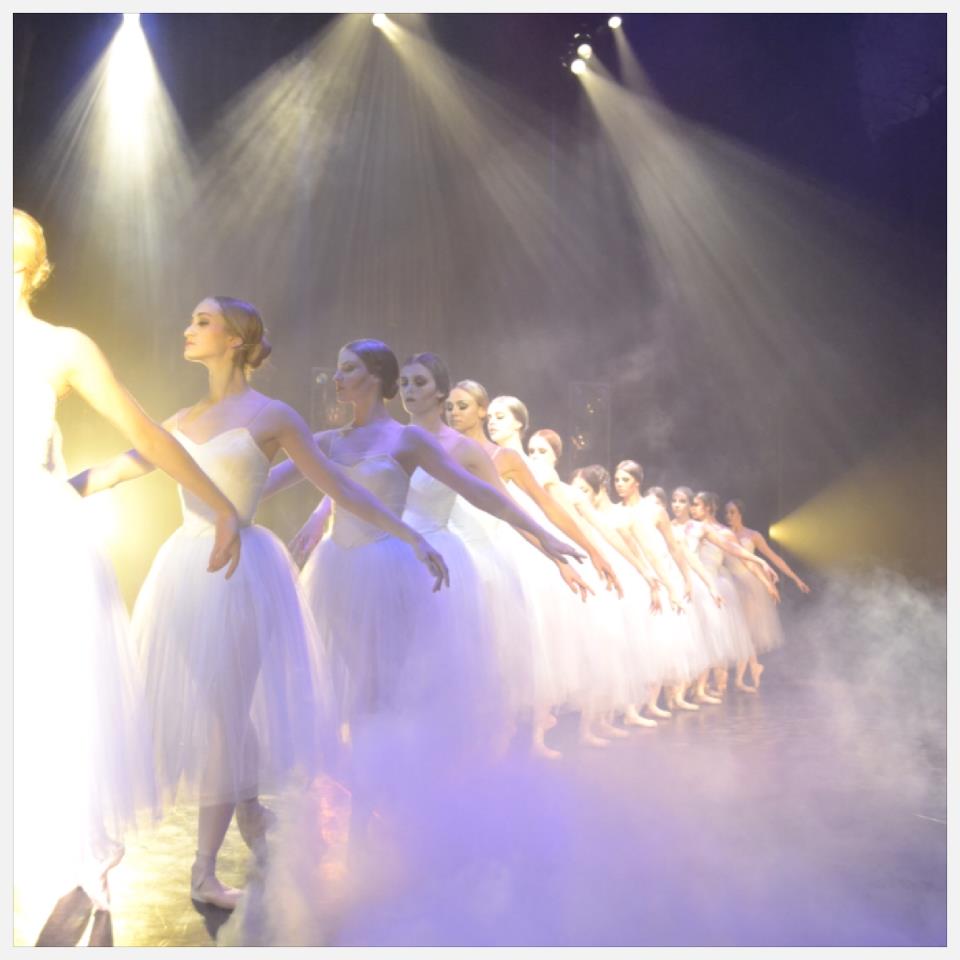
The second act opens in a moonlit forest clearing near Giselle’s grave. This is the domain of the Wilis – spirits of young women who died before their wedding day. These spirits, embittered by their fate, force any man they encounter to dance until he dies of exhaustion.
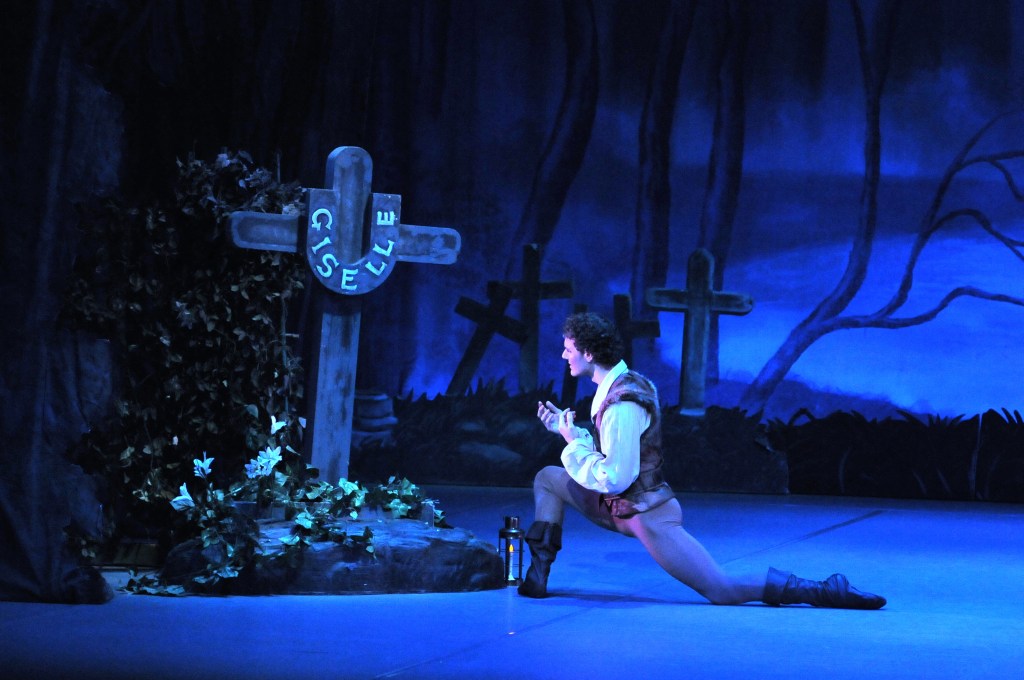
The act begins with Hilarion visiting Giselle’s grave late at night, followed by the entrance of Myrtha, the Queen of the Wilis. When Hilarion is discovered, the Wilis pursue him, forcing him to dance until he is driven into the lake, where he drowns.
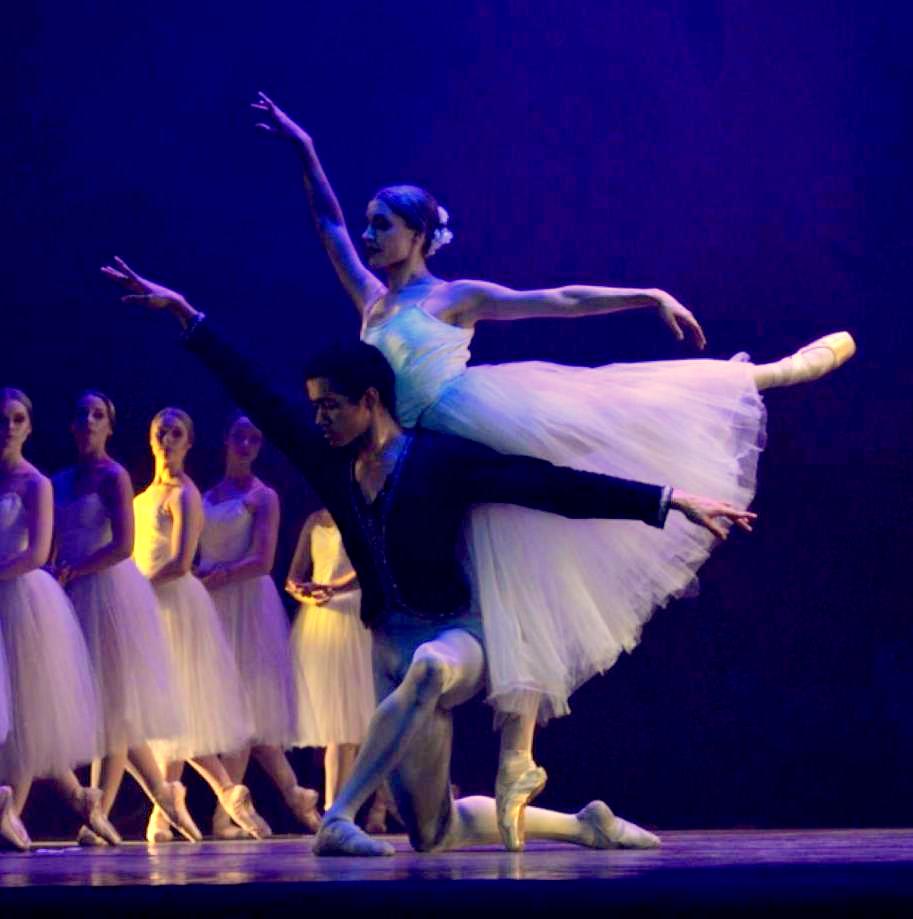
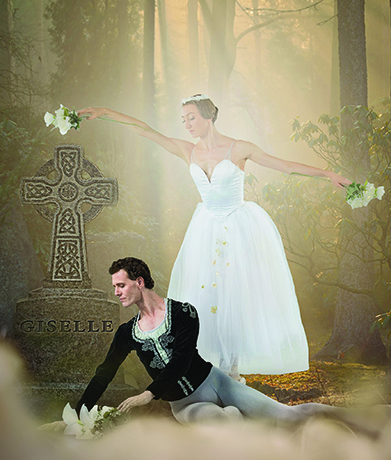
Albrecht arrives to lay flowers at Giselle’s grave, tortured by remorse. Giselle’s spirit appears to him, and their pas de deux is one of the most moving in all of ballet – she still loves him despite his betrayal. But the Wilis discover them, and Myrtha orders Giselle to dance with Albrecht until he dies.
What follows is a battle between love and vengeance. Giselle attempts to sustain Albrecht, helping him dance through the night until dawn. As the first light breaks through the trees, the Wilis’ power fades, and they retreat into the forest. In the ballet’s final moments, Giselle returns to her grave, having demonstrated that love is stronger than death. Albrecht is left alone, forever changed by his experience.
PAST PERFORMANCES – 2011 & 2012
 DARREN McINTYRE